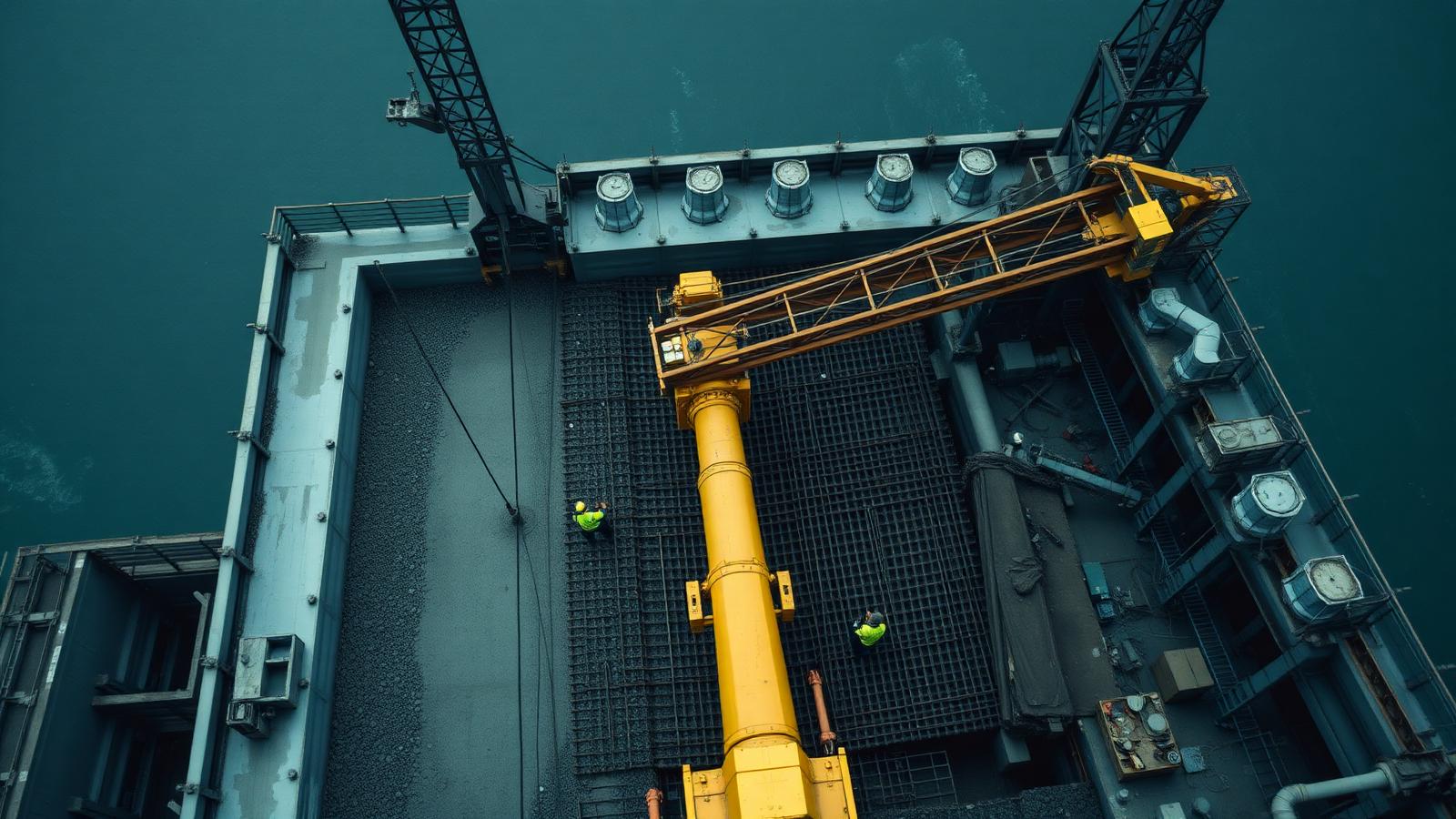
The Pour That Almost Went Wrong: Lessons from a Miami High-Rise

A stalled pump, a hot afternoon, and 300 yards of concrete on the way. What we did in the next fifteen minutes decided the whole job.
It was a Saturday deck pour on a high-rise in downtown Miami. Around ninety degrees, humidity that felt like a wet towel, and we were about a third of the way into a 900-yard elevated deck. The pump started coughing. Then it stopped.
There are moments in this trade where you feel every year of experience arrive at once. The truck rotation was already staged, concrete was en route on that ninety-minute ASTM clock I mentioned in another piece, and we had roughly fifteen minutes before mud started sitting too long in the drums and we started dealing with cold-joint risk on a deck that was never designed to have one.
Concrete pump failures aren't rare, and the causes run a predictable list: hydraulic hose failure, a valve or coupling issue, a stability problem with the outriggers, a boom section fault, or something as simple as a remote control losing signal. The reason pre-use inspections exist — checking hydraulic hoses, valves and couplings, pump stability, and boom sections before the first yard ever goes through the line — is that almost every pump failure on a jobsite traces back to one of those five things, and almost every one of them is catchable before the pour starts. We had done our pre-use inspection that morning like always. This one just failed anyway, which happens, because equipment fails even when you do everything right.
The first thing I did was slow down. Not physically — mentally. I stopped the crew from running around, I got the pump operator on the radio, I called the batch plant, and I got the second pump we had on standby moving, in that order. If I had started with the crew, I would have been reactive and probably made the situation worse by creating panic before I understood the actual timeline. Starting with the pump operator told me whether we had a fifteen-minute problem or a two-hour problem. That distinction is everything.
Having a designated signaler with a direct line of communication to both the boom and the pump operator, plus a radio-equipped backup in case that primary line failed, is standard practice for a reason — the number one cause of fatal accidents on a pump job is boom contact with power lines, and clear, redundant communication is a big part of what prevents that and every other pump-related incident from compounding into something worse. On a stalled pump specifically, that same communication discipline is what let us diagnose the failure fast instead of guessing at it while the clock ran.
It was a fifteen-minute problem. We rerouted trucks, brought the backup pump into position, adjusted the placement sequence to protect the joint line where the interruption happened, and kept pouring. The deck came out clean. The inspector never had a bad question about that section. And the crew went home on time.
What I took from that day, and what I still hold to on every big pour since: preparation is a form of safety, and redundancy is a form of respect for the people standing on the deck. Having a second pump on standby was not a luxury item in the budget. It was the reason nobody got hurt trying to save the pour with a risky workaround, and it was the reason a 900-yard deck didn't end up with a structural cold joint that would have needed an engineer's sign-off and possibly a repair nobody wanted to pay for.
Operator certification matters here too, more than people outside the trade realize. A certified pump operator, trained through recognized programs on equipment operation, hazard management, and emergency shutdown procedure, is the difference between a fifteen-minute recovery and a much longer, much more dangerous one. Every hard lesson I have learned in concrete traces back to something we could have prepared for and either did or didn't. The pours we prepare for are boring. The pours we don't are the ones that turn into stories — and I'd rather tell you about the boring ones, because those are the ones where everybody went home the same way they came in.